The time it takes to learn quilting depends a lot on you, your first projects, sewing experience, and how much time you have to practise. Those first projects are going to take the longest as you figure out the basics and build confidence in the new quilting skills you are learning.
I began sewing in 2021. About two weeks later, I started my first quilt, which took about a month of sewing quite a bit each day. By my second quilt, things were starting to feel easier.
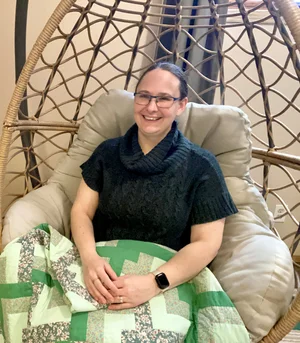
Today, I’m a quilt pattern designer, longarm quilter, and teacher at Timeless Quilt Studio in La Ronge, Saskatchewan. My own beginning still shapes how I teach.
How did I go from napkins to my first quilt?
Our second wedding anniversary—the cotton anniversary—inspired me to make cloth napkins in our wedding colours. I bought a sewing machine, had no previous sewing experience, and jumped into it all out.
First came napkins, then coasters, then placemats all before attempting the quilt my husband asked for - I was doing all of this pretty scared. I had only been sewing for about two weeks when I started the quilt, but I had researched what I needed to do and found YouTube videos to guide me.
That first quilt took about a month, with plenty of daily sewing. If you’re fitting quilting into occasional evenings or weekends, your timeline may look different.
When did quilting start to make sense?
Even with my research, some things took time to understand:
How to nest seams.
What pressing meant compared with ironing.
Whether my attempts at ¼-inch seams were okay.
Nesting seams just clicked one day and my seam allowances needed a lot of practice. Some seams were a bit narrow, and I left them. A couple of spots on that quilt have since had fabric pull away from a seam, possibly where those allowances were too narrow.
By my second quilt, the process was a lot more familiar. I was still learning, but things made more sense. Finishing that first quilt had given me a lot of experience to bring into the next one.
How does that experience shape my beginner course?
In the beginning, I remember watching a demonstration and still wondering whether I was doing it correctly. I struggled to “see” what was on the video because the camera angle didn’t show what I needed to see in order to fully understand. My background in education helps me gather information, figure it out and then explain those skills clearly, and being a newer quilter means I remember many of those beginner questions.
In Learn to Quilt: Foundations, I show students how to nest seams and press fabric, along with what to check and which seams need fixing before they cause problems.
The projects follow a progression similar to my early learning:
Folded Coasters: Begin by sewing seams and pressing.
Nine-Patch Hot Pads: Learn how to piece and get those ¼” seams going.
Three-In-A-Row Game Board: Builds on the previous skills and introduces quilting and binding.
I recommend this course because one, I’m bias! and two, it includes explanations and demonstrations I was missing when I began, with smaller projects to practise on before managing a larger quilt.
Your first projects may take a few sewing sessions or stretch over several weeks. Give yourself time to understand the steps and ask questions along the way. You can enjoy making something fun while your skills and confidence grow.
If you’ve been quilting for a while, I’d love to hear how long it took for you to learn to quilt and make it through that initial learning stage. Share your story in the comments!