How Much Space Do You Need to Start Quilting?
Very little. A small table, a safe place to press fabric, room for your sewing machine, and a way to keep your quilting supplies organized is enough.
It’s easy to assume you need a large cutting table, a full-size ironing board and a permanent sewing station before you can begin. Those things are helpful, but you will find a lot of people quilting in a corner of a bedroom or at the kitchen table.
The keys to being successful in a small space are developing an organization system that works for you, being creative with how you use the space, and starting with smaller projects to help you learn what you can and can’t do in your space.
What is the minimum space needed to start quilting?
At a minimum, you need:
a surface for cutting or arranging fabric;
a safe place to press fabric;
a table or desk for your sewing machine;
enough room to sit comfortably;
storage for your project and tools between sewing sessions.
These spaces might all happen at one small table or be spread out over a couple of rooms. Your kitchen counter might become your fabric cutting/prep area and your dining table might be your sewing area.
You may need to Convert the same spot to different work stations.
One table can do several jobs - it can serve as a cutting table, ironing surface, and sewing table at different times. Keeping only the supplies needed for the current step gives you more room to work and makes cleanup much easier.
The most helpful habit is to work in stages:
Cut all the pieces you need.
Batch sew as much as you can.
Press the pieces.
Repeat the process.
Space-saving ways to press fabric
A full-size ironing board is convenient, but it also needs to be stored somewhere. In a small home or apartment, that may be more space than you want to give up.
A table-top ironing board is one option. These are small enough to store in a closet, under a bed or beside a piece of furniture.
A wool pressing mat is another space-saving alternative. It can sit on a table or counter when you need it and be tucked away on a shelf when you are done. If you are using a wool mat on a non heat safe table or surface place a folded bath towel underneath it to provide another layer of heat protection.
Your kitchen can be a useful quilting space
If you have a kitchen or dining area, you may already have several useful quilting surfaces.
Kitchen counters make excellent cutting spaces. They are often more comfortable to work at than a dining table because they are higher and you aren’t bending over so much to cut your fabric. However, they are narrow so you will need to decide if your counter top provides a deep enough work space. Just be sure that you use a self-healing cutting mat under your fabric to protect your counter and lengthen the lifespan of your rotary blade.
Countertops are also more heat resistant than other surfaces so it may be a great place to set up an ironing station.
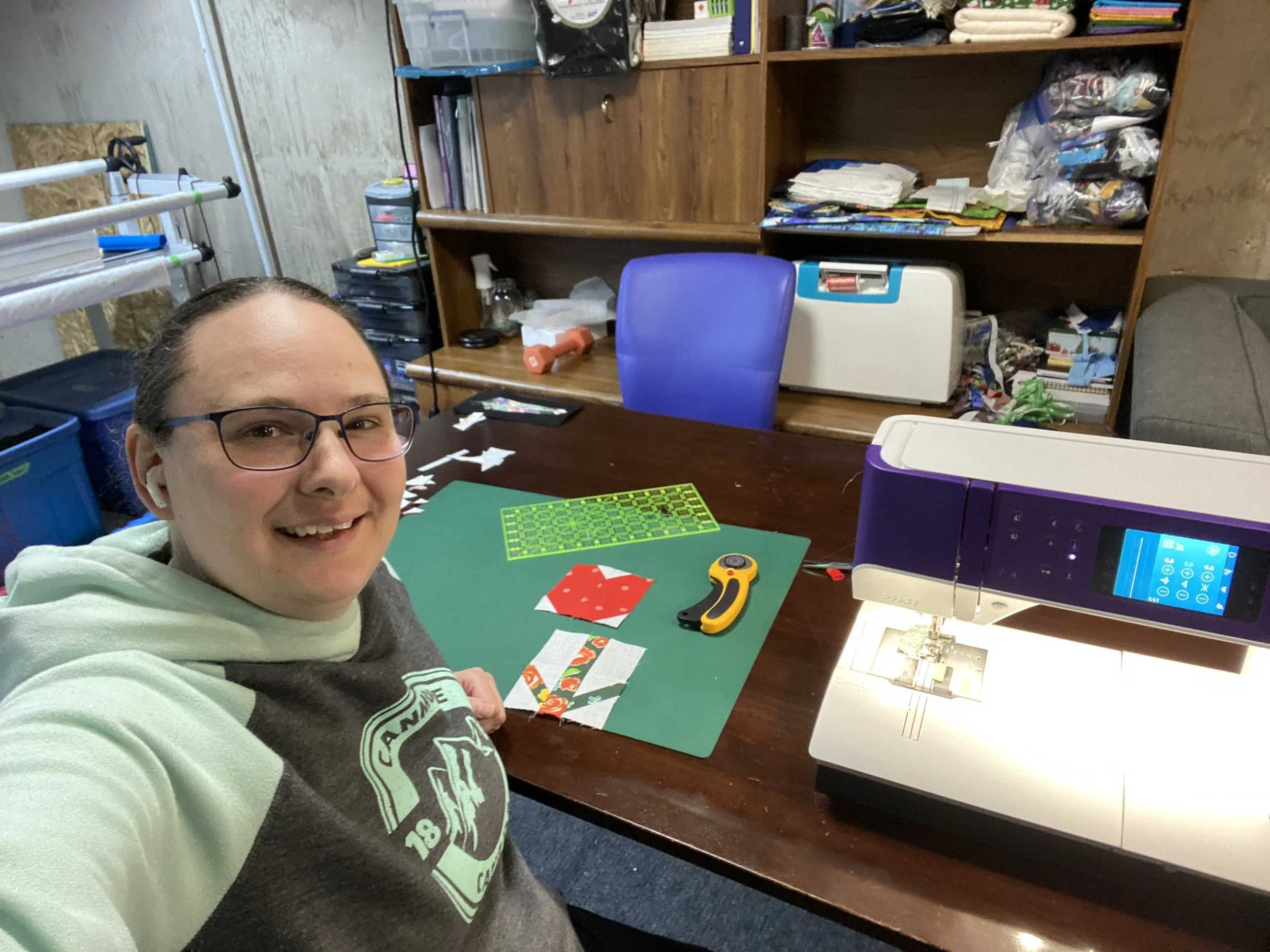
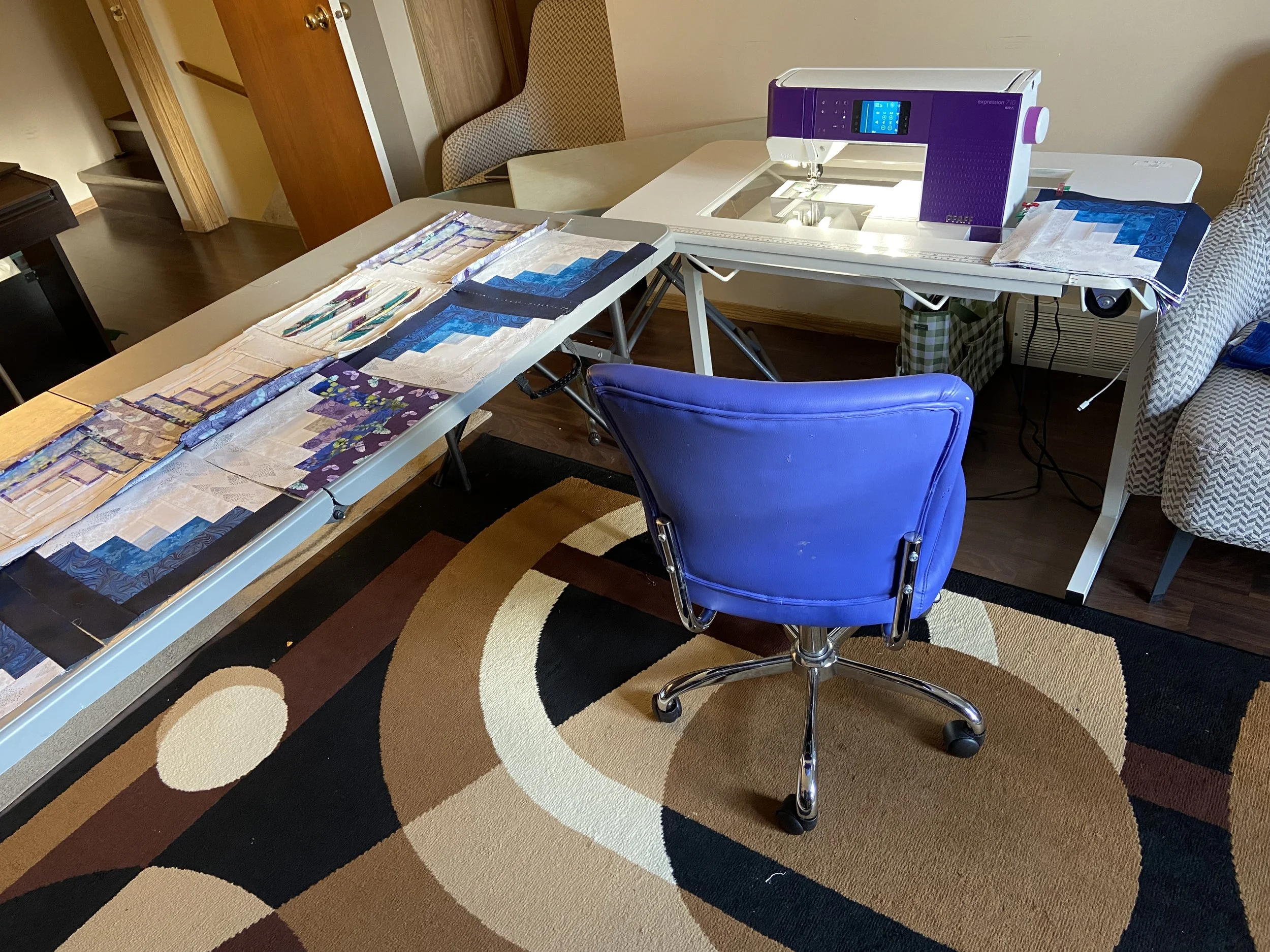
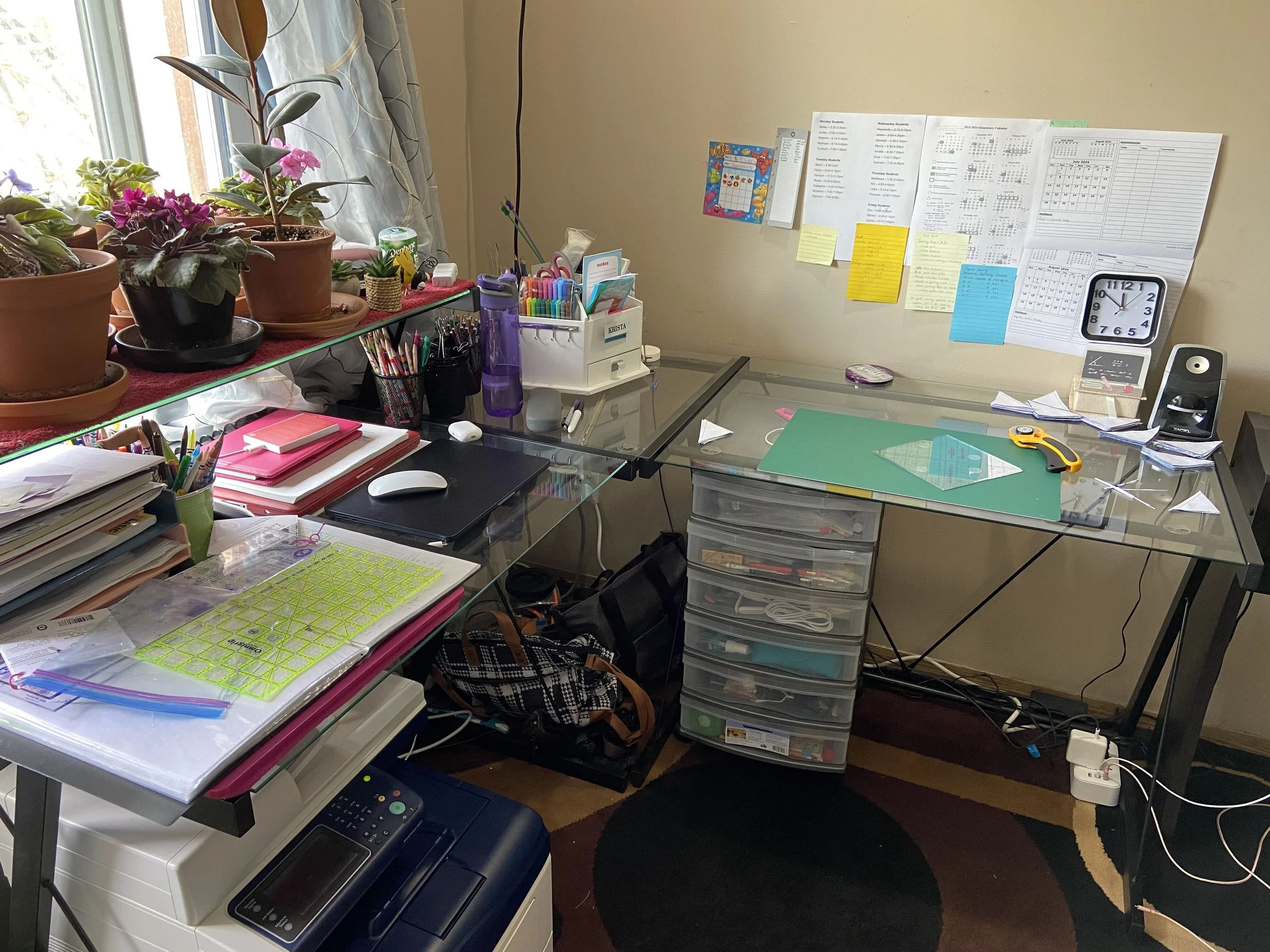
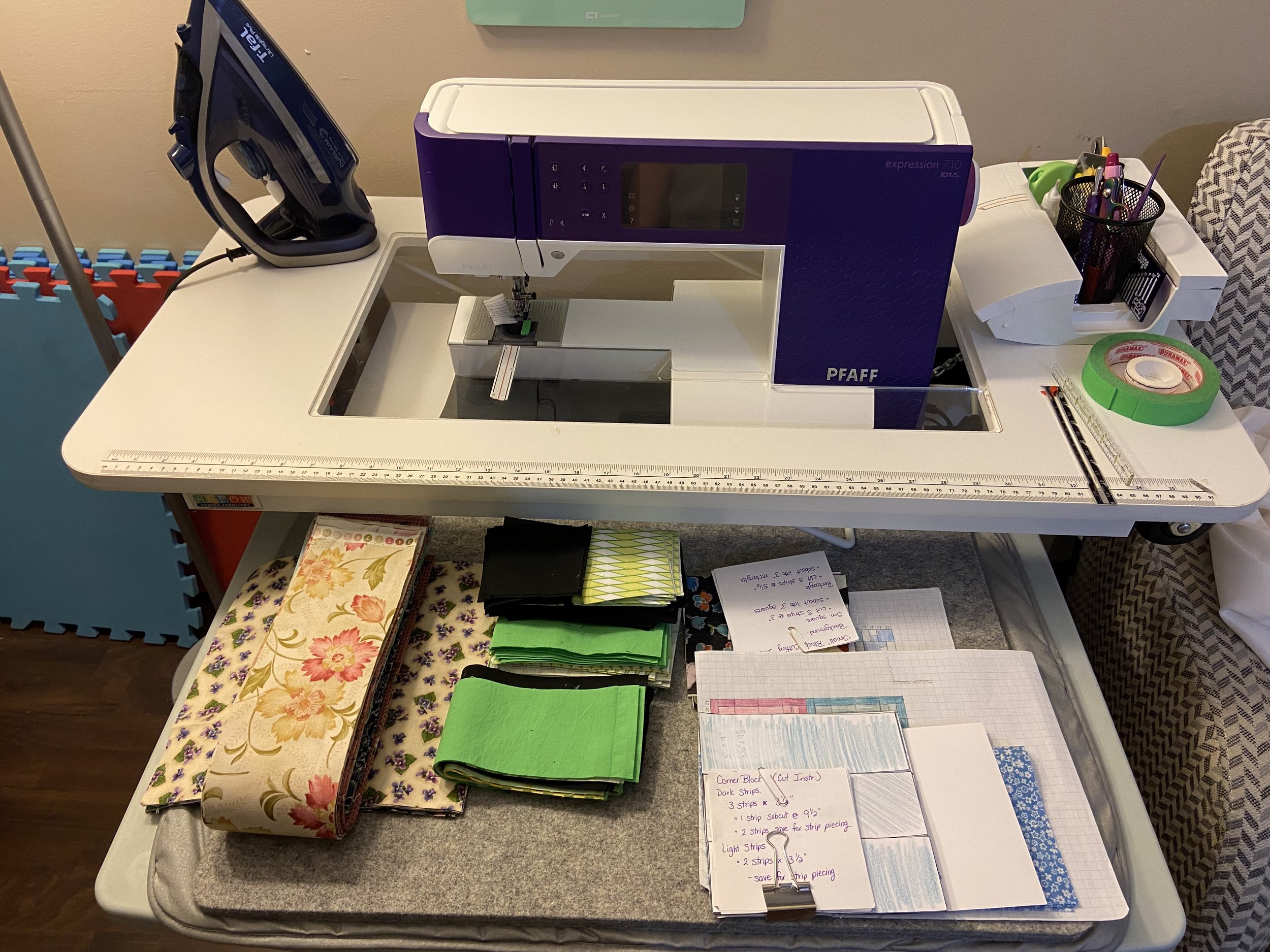
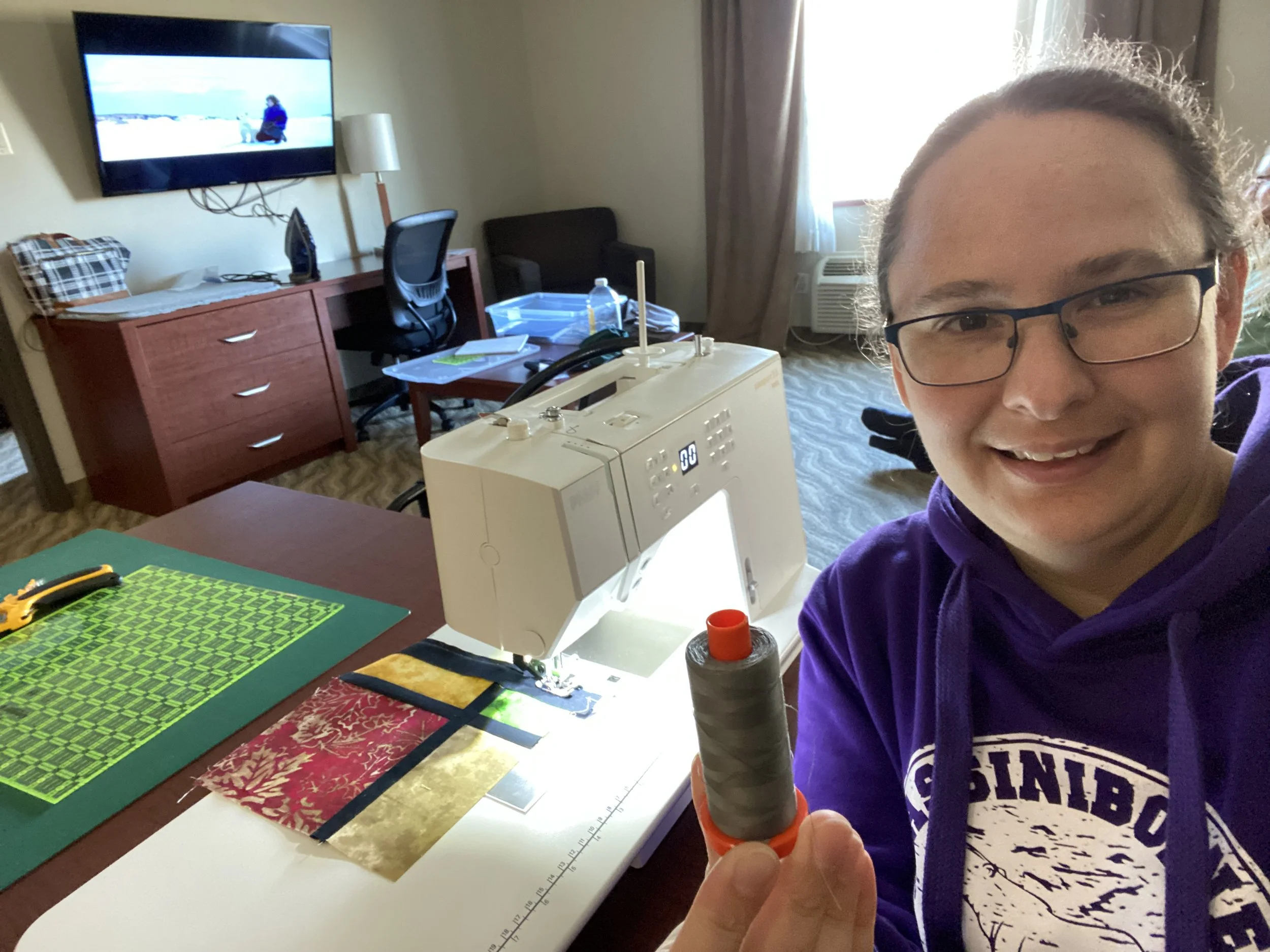
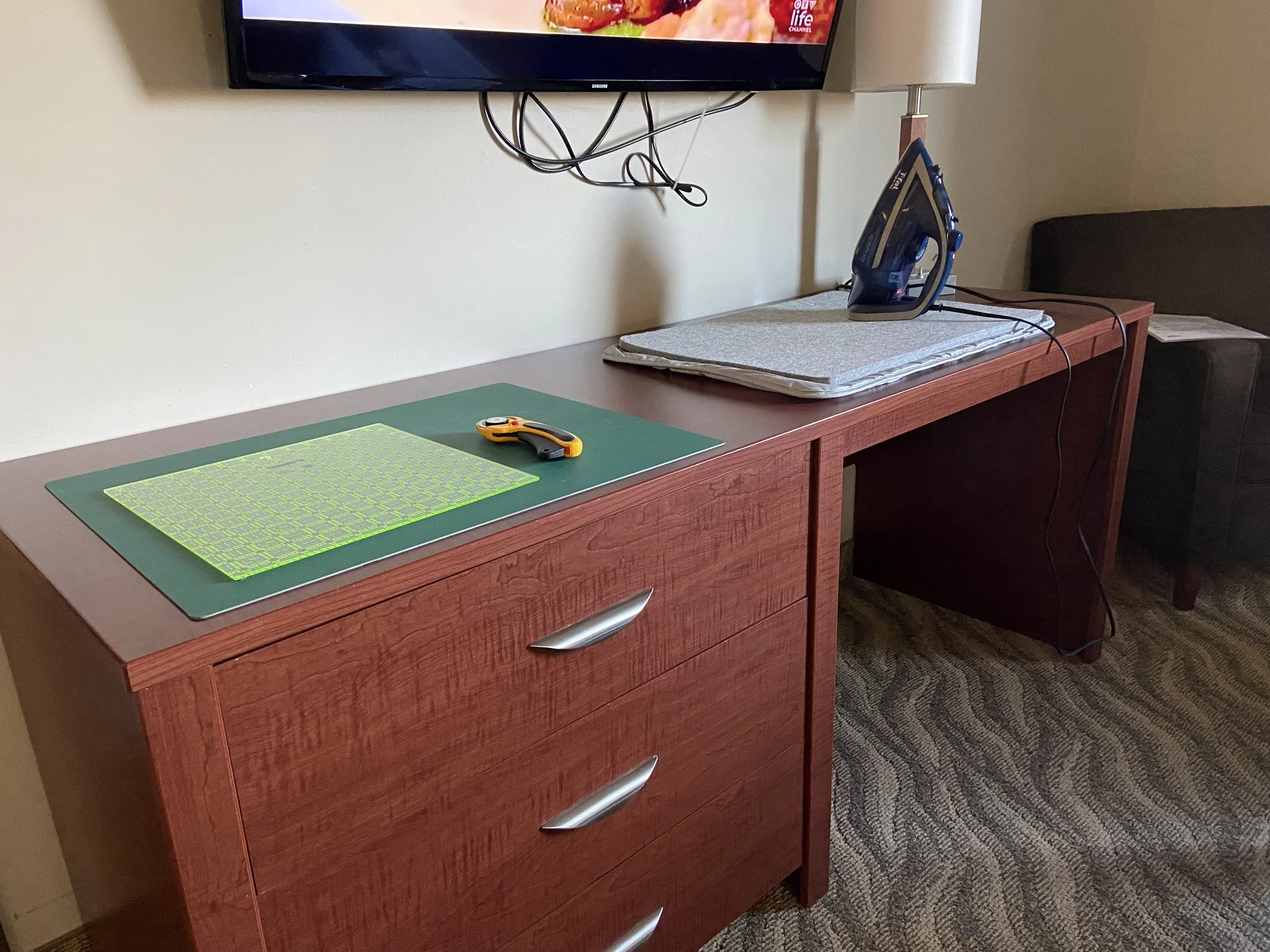
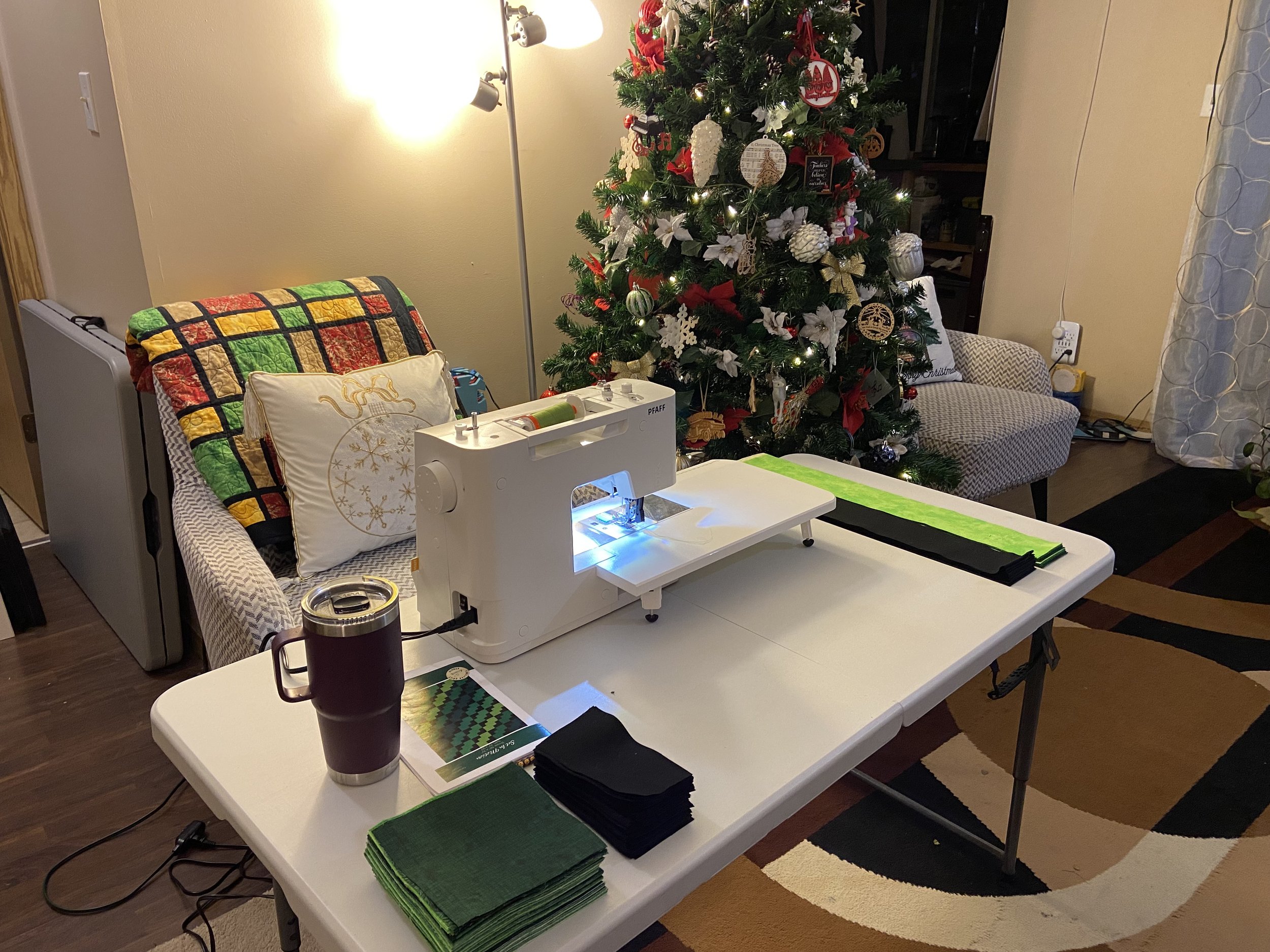
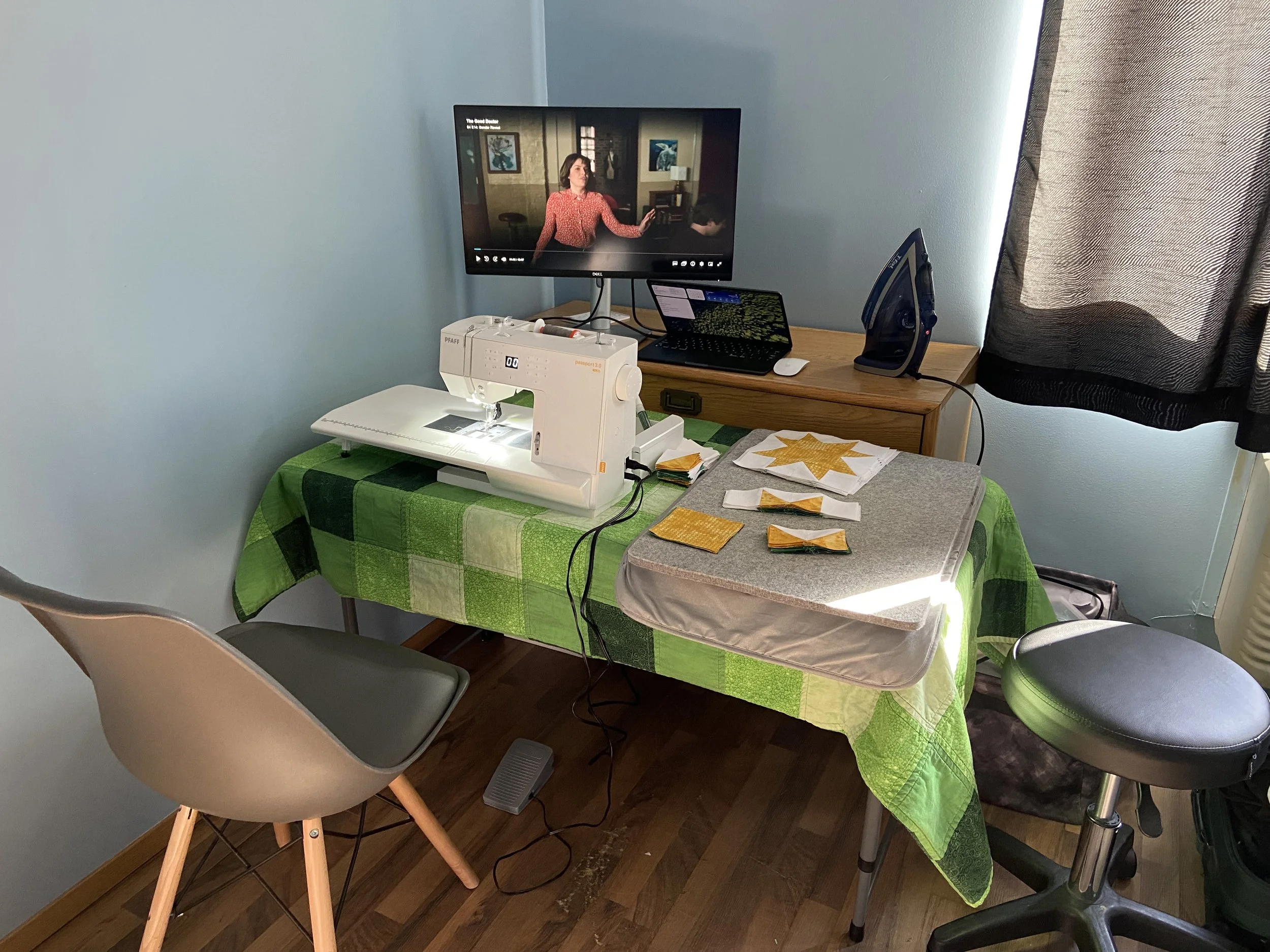
I’ve set up to sew in all kinds of different spaces. I hope the pictures below will give you some ideas on how you might be able to work in your space.
** Adjustable height folding tables are an amazing way to temporarily extend your work space.
The floor or bed Make Great design spaces
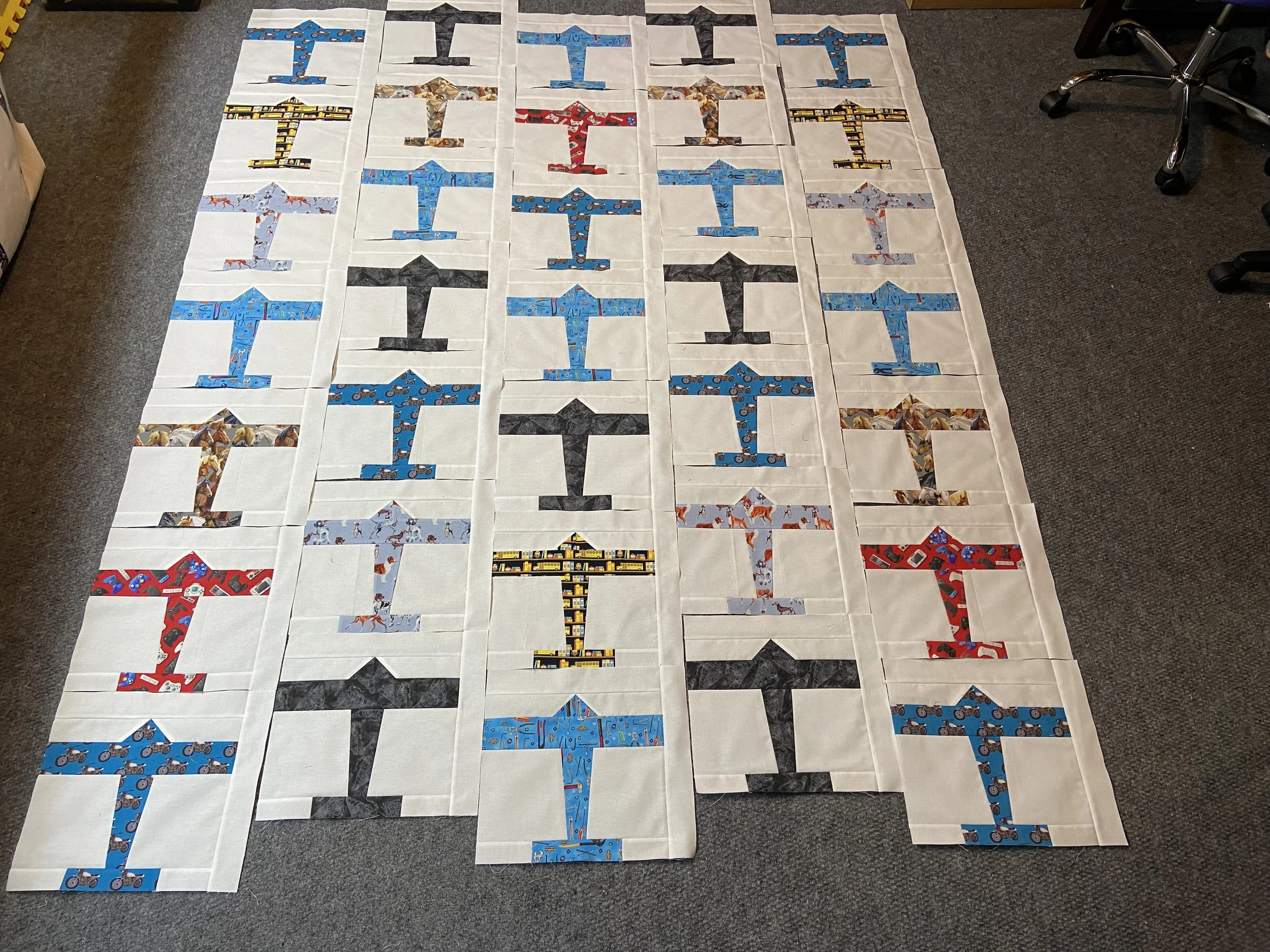
You do not need a design wall to arrange quilt pieces. The floor or the top of a bed can give you enough room to lay out blocks, rows or fabric choices.
No matter where you lay out your quilt blocks, take a photograph of your layout before moving anything. Your photo serves as a design wall record and you will reference it often when sewing your pieces together.
Keep each project organized
When you cannot leave your sewing area set up, organization becomes part of the quilting process.
A project container can be as simple as:
a plastic bin;
a basket;
a fabric tote;
a Ziploc bag.
a drawer or shelf in a nearby piece of furniture.
Keep the pattern, fabric, cut pieces, thread and small tools together whenever possible. Small pieces of paper also make great labels if you need to track different stages of piecing and blocks.
Clear containers make it easier to see what is inside, but they are not essential. The most important thing is that your project has a reliable home.
If the sewing machine cannot stay on the table, it may fit under the table or under the bed. Make sure it is protected from dust and cannot be kicked, knocked over or pushed into by a chair.
The best storage solution is the one that makes it easy to begin again.
Begin with what you have. Choose a project that you can comfortably work on. Create a simple system for setting up and putting away.
Helpful Beginner Quilting Blogs
If you are still deciding what you need or where to begin, these articles may help:
What Do You Actually Need to Start Quilting? explains the basic tools and supplies needed to begin.
Can I Quilt If I’ve Never Sewn? answers common questions about learning to quilt without previous sewing experience.
What Should a Beginner Make First? explores how to choose a first quilting project that fits your learning style and personality.
Learn to Quilt: Foundations
Small projects can be especially helpful when you are learning to quilt in a small space. They are quicker to complete, easier to clean up and simpler to store between sewing sessions.
Learn to Quilt: Foundations is built around three small projects:
folded coasters;
nine-patch hot pads;
a Three-in-a-Row game board.
Each project introduces new quilting skills while allowing you to practise setting up, sewing, pressing, organizing and cleaning up in the space you already have.
Learn more about Learn to Quilt: Foundations.
About the Author
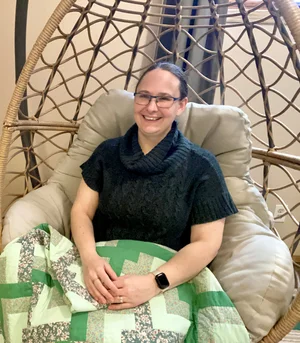
Krista Russell is the owner of Timeless Quilt Studio in La Ronge, Saskatchewan. She is a quilt pattern designer, long-arm quilter and teacher who believes quilting should create confidence, connection and meaningful handmade pieces.
Krista began quilting in 2021 after learning to sew cloth napkins for her cotton anniversary. Her first quilt followed soon afterward, taught through online videos and plenty of trial and error.
With a Bachelor of Education and many years of teaching experience, Krista creates beginner-friendly quilting instruction that breaks new skills into manageable steps.
Read more about Krista and Timeless Quilt Studio.