What Do You Actually Need to Start Quilting?
You know in your heart that quilting must not require every ruler, cutter, gadget, and specialty tool suggested on the internet. After all, people were making quilts long before rotary cutters, acrylic rulers, and computerized sewing machines existed.
I’m here to tell you that you are right!
The essential quilting supplies for beginners are fabric, thread, a needle, scissors, straight pins, iron, and a seam ripper. A sewing machine, rotary cutter, cutting mat, and acrylic quilting ruler can make the process faster and easier, but you do not need to purchase every quilting tool before making your first project.
If you found this post while trying to figure out what quilting supplies a beginner actually needs, there is a good chance you are feeling overwhelmed. The internet offers long lists of supplies that can make it seem as though beginning to quilt requires a sewing room full of equipment and a large upfront investment. It doesn’t. You can begin with less and spend less money.
What Quilting Supplies Does a Beginner Need?
I remember trying to sort through what I needed to sew my first project. My budget was limited, and I did not want to spend money on tools I might use once, in case I decided that quilting was not for me.
One of the best pieces of advice I received was this: “You do not need to buy everything at once”. You will grow your tools and gadgets over time.
What you get and when is going to depend on the following:
Your current project specifically needs it.
You need a particular quilting step to be easier so you can continue to enjoy it.
Essential Quilting Tools for Beginners: The Absolute Bare Minimum
Technically, an entire quilt can be pieced and quilted by hand so you don’t even need a sewing machine. Whether you want to cut and sew an entire quilt this way is another thing.
I bought a fairly basic sewing machine because sewing by hand was (and still is) never going to happen!
Here is The Absolute Bare Minimum you need to begin:
Needle
Thread
Fabric for the project
Scissors
Seam ripper
Straight Pins
Tailor’s Chalk, Pen, or Pencil to mark fabric
Office or school ruler
Iron
Ironing board or another heat-safe pressing surface
How I started Quilting
My name is Krista Russell and I started quilting in 2021. The short story - cotton anniversary. I caught the quilting bug so hard that I started long-arming, pattern writing, and more recently teaching and I have a small retail space out of my house to bring in much needed supplies to my rural northern community.
My first project was making some folded coasters. I bought clearance fabric, measured out my squares with an office ruler, drew the cutting lines with chalk, and cut the fabric with a pair of dull scissors.
I bought an iron and folded up some bath towels to create a heat-safe surface on a plastic folding table.
It worked. I made the coasters, and I have pictures.
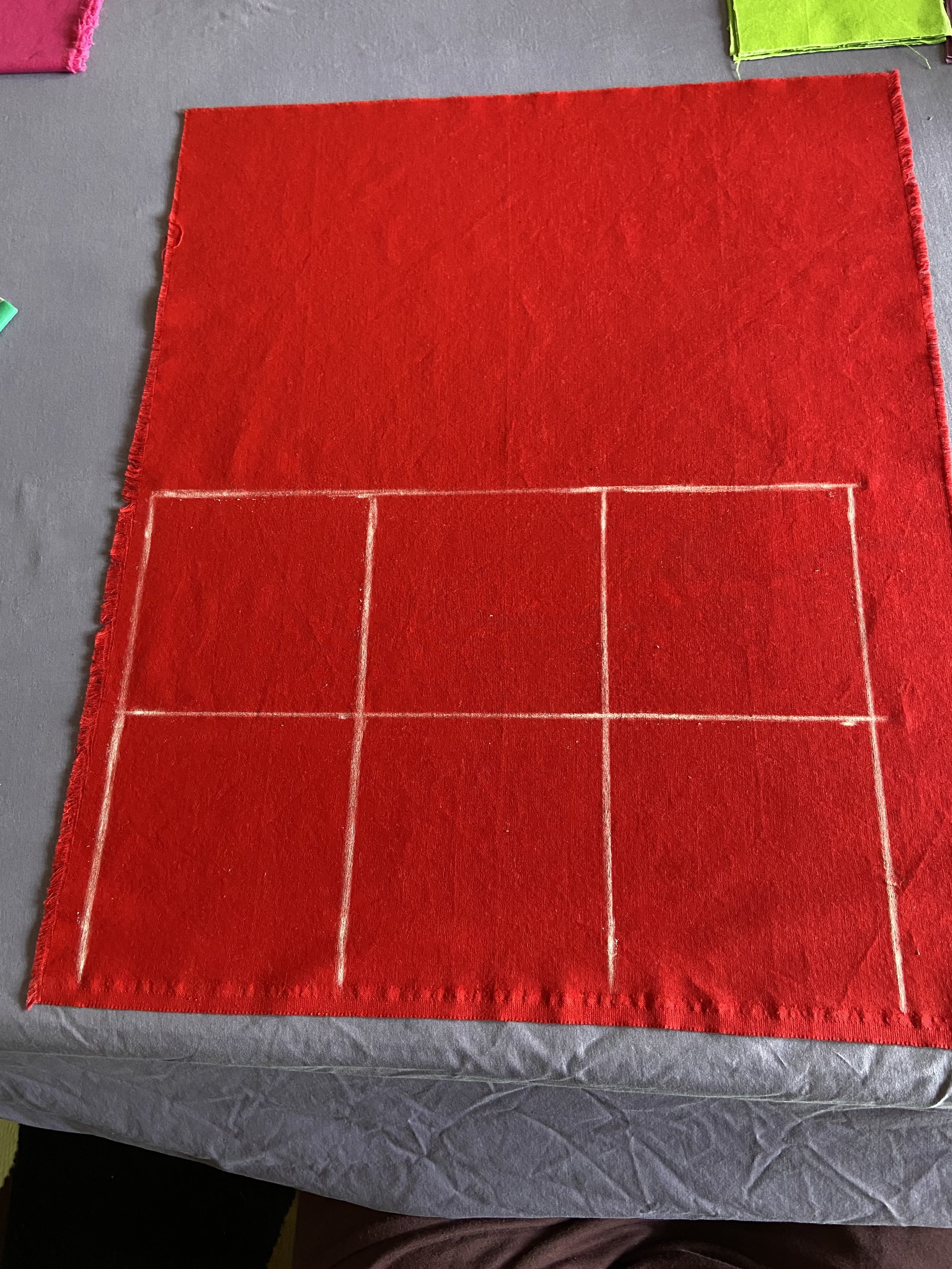
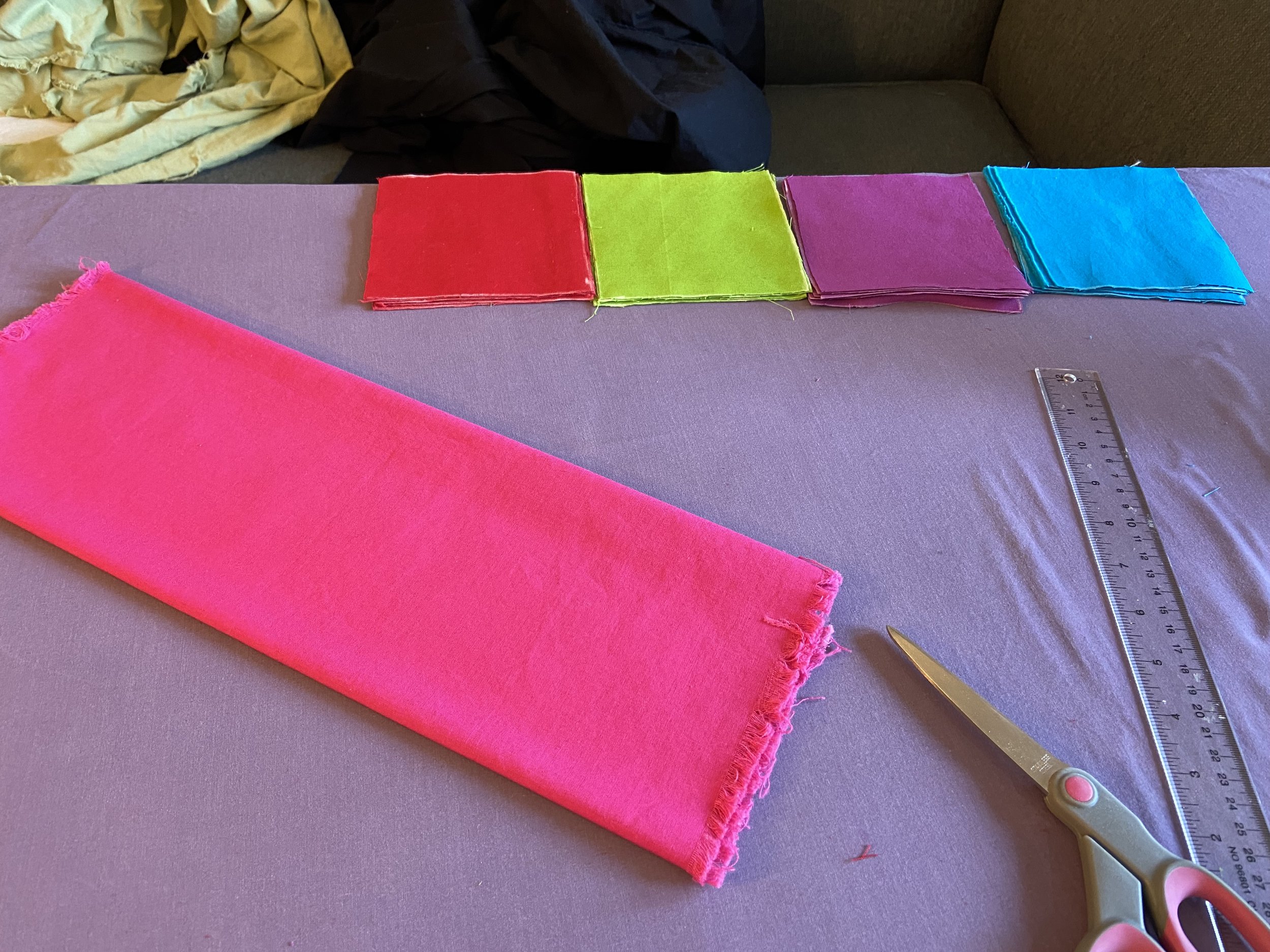
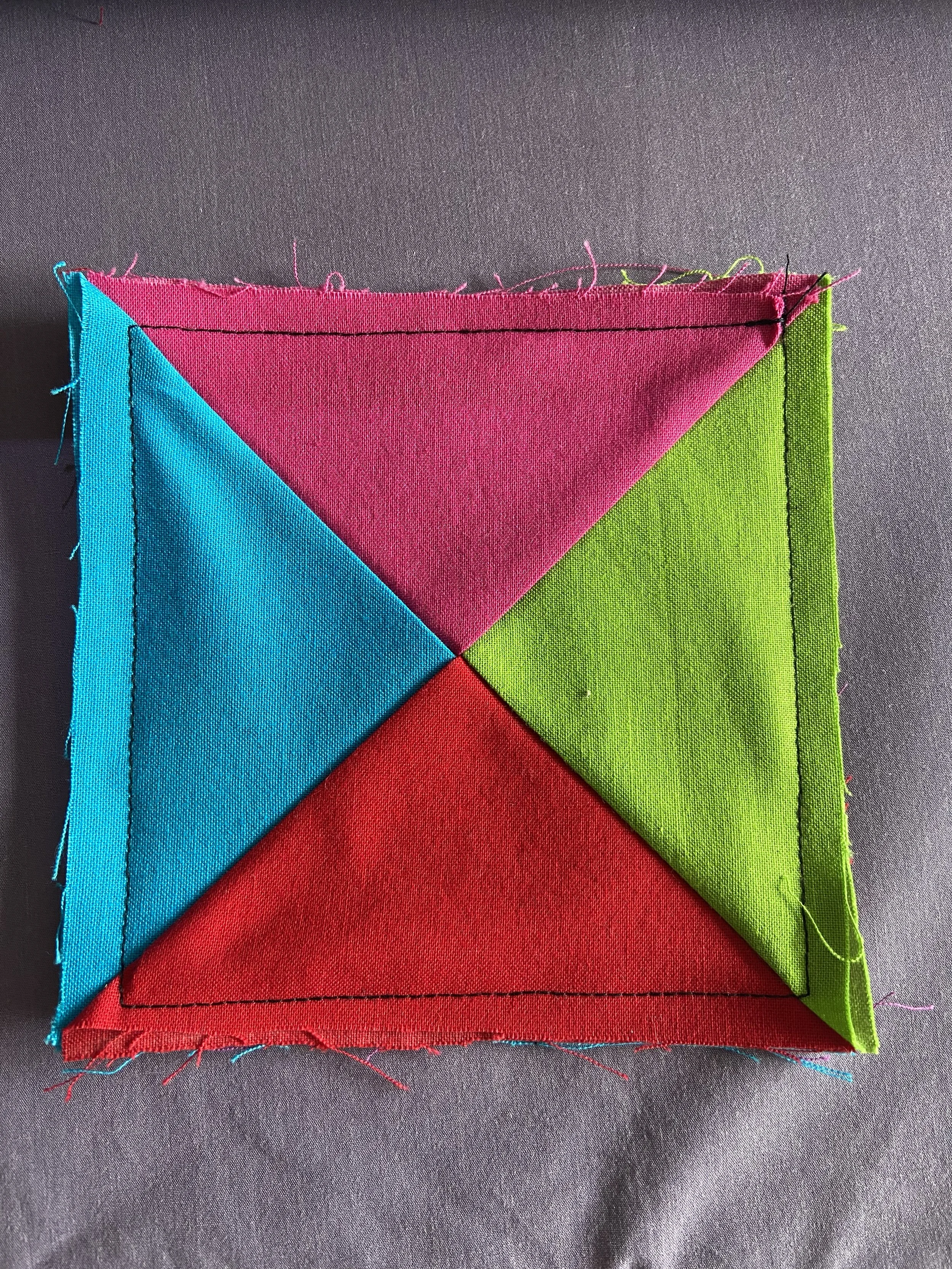
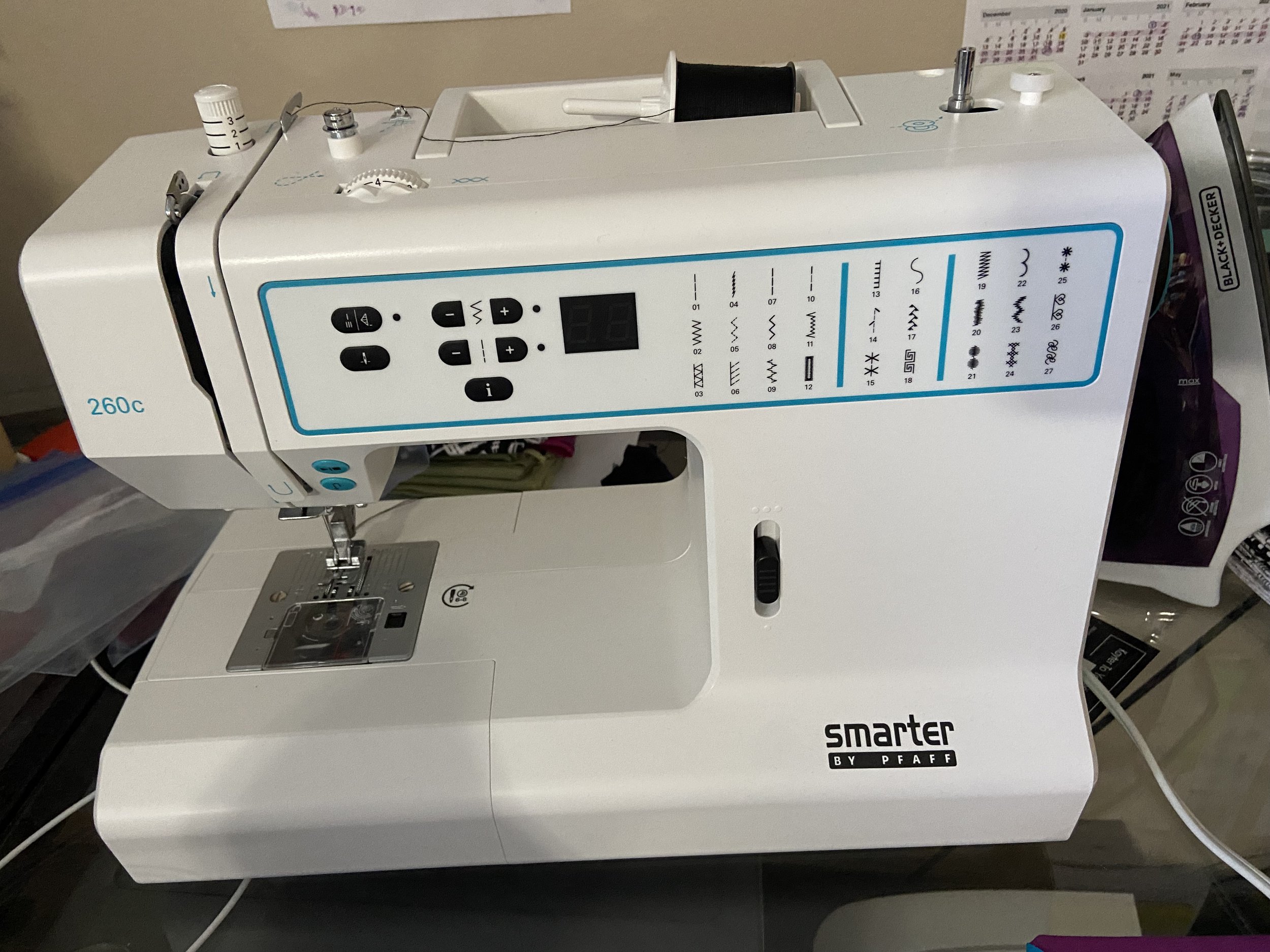
the first three quilting tools every beginner should have
That first project taught me that I was not going to enjoy sewing or quilting very much if I had to measure, mark, and cut every piece that way. I did not need every quilting tool available, but I needed a few things that would make the process easier.
For me, the practical minimum became:
Rotary cutter
Self-healing cutting mat
Acrylic quilting ruler
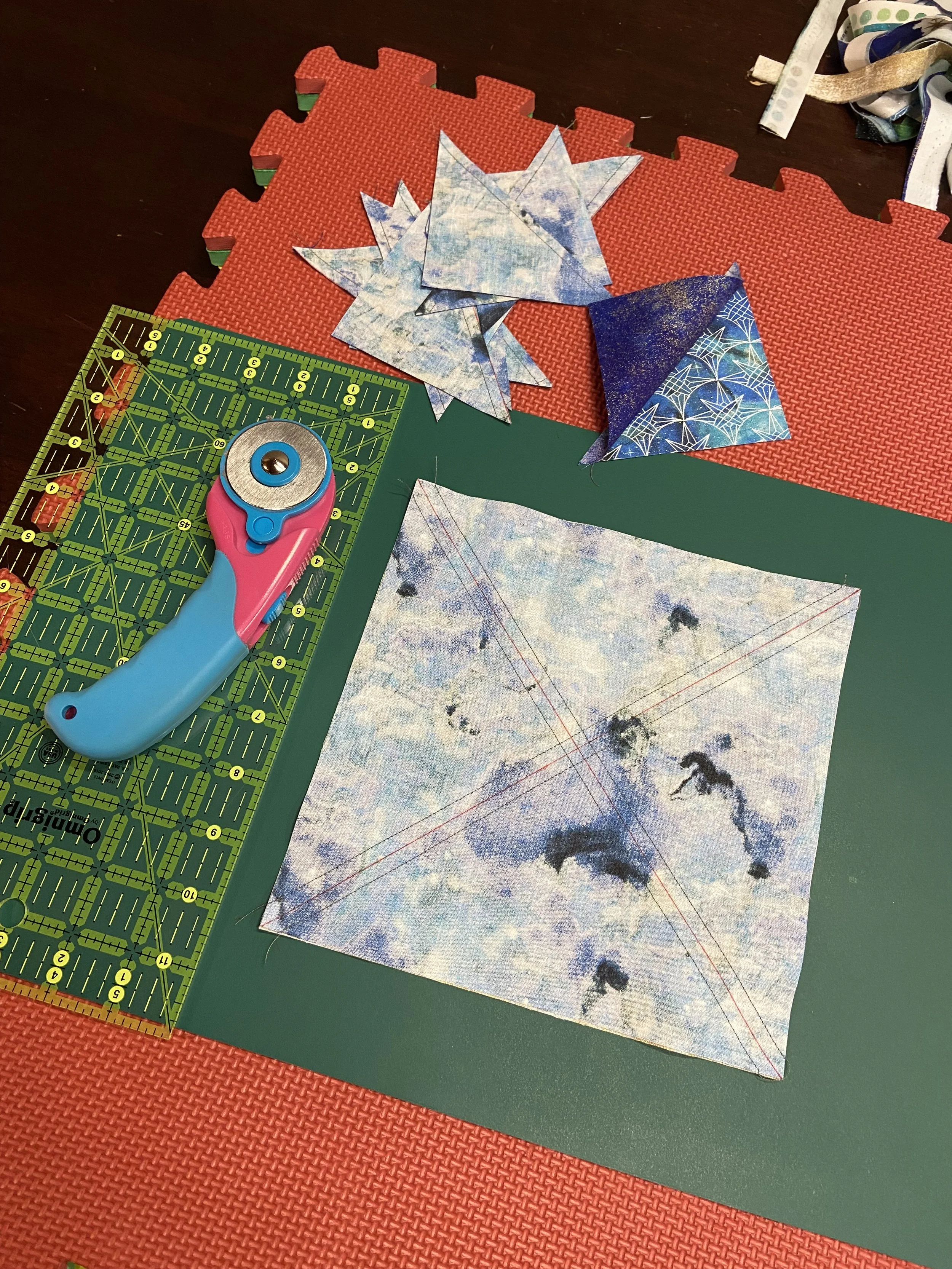
A basic sewing machine is enough to get started. It does not need to be labelled as a quilting machine or have dozens of decorative stitches. It just needs to sew a reliable straight stitch.
Acrylic quilting rulers measure fabric in length and width and provide a straight edge to support the rotary cutter. The self-healing cutting mat protects the surface underneath from the rotary blade.
Gone are the days of trying to draw straight and square lines for each shape!
These three quilting specific tools are not required to begin, but they will remove a great deal of frustration.
What Sizes of quilting tools should I get?
I go by this general rule: Get the biggest you have room for and can afford.
Quilting tools are expensive. Going cheap or smaller can mean upgrading to better quality and/or larger sooner than if you had started with something better and bigger.
Rotary Cutter: A standard 45 mm rotary cutter will see you through every project. The replacement blades are also easier to find and cheaper than larger and smaller versions.
Acrylic Quilting Ruler: 8½" × 24" ruler. If you can manage the cost you won’t buy another ruler (unless you really do want something smaller or a square ruler in the future). I started with a 6” x 12” ruler and while it worked, I could hardly wait until I could upgrade it to the larger ruler. I hardly use my 6” x 12” ruler.
Self-Healing Cutting Mat: Buy the largest size you can comfortably afford and store. An 18" × 24" mat provides enough room for most projects. A 24" × 36" mat offers more flexibility if you have the budget and space for it. Self-healing mats need to be stored flat, away from heat, and out of direct sunlight.
where Can I find affordable quilting tools
Not every tool or piece of fabric needs to be purchased new.
Estate sales can be excellent places to find quilting rulers, cutting mats, irons, sewing supplies, and sometimes even sewing machines. Online resale and fabric destash groups are also worth exploring, particularly when someone is clearing out supplies they no longer use.
Before purchasing used tools, check that rulers are not chipped, cutting mats lie flat, and sewing machines are in working condition. Rotary cutter blades can be replaced, so a dull blade does not necessarily mean the cutter itself is no longer useful.
For fabric, check clearance aisles for woven cotton or quilting cotton in colours you like. Clearance fabric is often discounted because the shop is making room for something new, not because there is anything wrong with it.
Starting with lower-cost fabric can also ease some of the fear that comes with making those first few cuts. It is much easier to practise when it does not feel as though you are cutting directly into money… I mean, fabric.
And lastly, if you are ordering online and find a good deal - make sure it really is a good deal. If it’s really cheap, it’s likely too good to be true.
Karen Brown of Just Get It Done Quilts has a great video where she shows some quilting items she bought for a great price. It is worth the watch and the video is embedded at the bottom of the page.
how much should I spend on quilting tools?
There is a balance between spending responsibly, space, and having tools that allow you to enjoy the process.
Sometimes a pattern will introduce a specific tool or template to make the quilt. Other times, you will find yourself thinking, “There must be an easier way to do this,” and discover that there certainly is.
Experience will help you recognize which tools solve a genuine problem for you. Until then, begin with what you have, borrow or buy used where you can, and add the few tools that will make learning more enjoyable.
Nearly every quilter begins this way. No one starts with a dedicated sewing room filled with tools, fabrics, or fancy sewing machines.
Where do I go from here?
Are you looking for a low-stress way to learn how to quilt? I will soon be launching my online course Learn to Quilt: Foundations in September 2026.
The course teaches you foundational quilting skills without a lot of sewing equipment. You will need everything I talk about in this blog. Or, if you are Canadian*, you will have the option of purchasing ready-to-sew kits and eliminate the need for cutting your fabric (no cutting mat, rotary cutter, or acrylic quilting ruler needed).
We start with a simple set of coasters, similar to the ones I made, to get you comfortable with sewing straight lines. Then you'll move on to a pair of hot pads, where you'll discover how satisfying it is to see patchwork pieces come together. Then you will combine what you’ve learned to piece and bind a Three-in-a-Row game board for your first real taste of quilting from beginning to end.
Each project builds on the last, so you're never thrown into something too fast.
Learn more about the course here!
Sign up below to get onto the waitlist. You will be notified when it releases, receive exclusive waitlist discounts, and a chance to win the course for free.
*Due to extreme shipping costs and tariff regulations to the United States, shipping is currently only available in Canada.
