What Should a Beginner Quilter Make First?
The best first quilting project for a beginner is one with simple construction, clear instructions, and gets completed. For some new quilters, that means an easy, small project such as coasters, placemats or hot pads. For others, it means starting with a simple beginner quilt made from large squares or strips. Whether you should start small or make a full quilt first depends on your personality, sewing confidence, available time and what will keep you motivated.
I know that is not the tidy answer you were hoping for, but nothing in life - or quilting - quite works that way.
Are You a “Go Big or Go Home” Beginner?
If you are energized by a big goal, you may appreciate the practicality of a set of coasters, but making them will not inspire you to pull out the sewing machine. You want to make an actual quilt for your bed, your child or someone you love.
If that sounds like you, a quilt can be your first quilting project. A larger project is not necessarily more complicated than a small one. A simple quilt made from large squares or strips may be easier to piece than a small project filled with tiny pieces or complicated points.
However, a bed-sized quilt does require more fabric, cutting, seams and time. It will also be heavier and more awkward to quilt on a domestic sewing machine.
Look for an easy quilt pattern for beginners with simple shapes, larger pieces and clear instructions. Set In Motion, for example, uses strip piecing and straightforward seams to create a full quilt without complicated construction.
Would You Rather Start Small?
Perhaps you are still becoming comfortable with your sewing machine. You may be concerned about wasting fabric or spending money on a hobby you are not yet sure you will enjoy. You might also be sewing on the dining-room table and packing everything away between sessions.
If that sounds familiar, a small quilting project is the perfect place to begin.
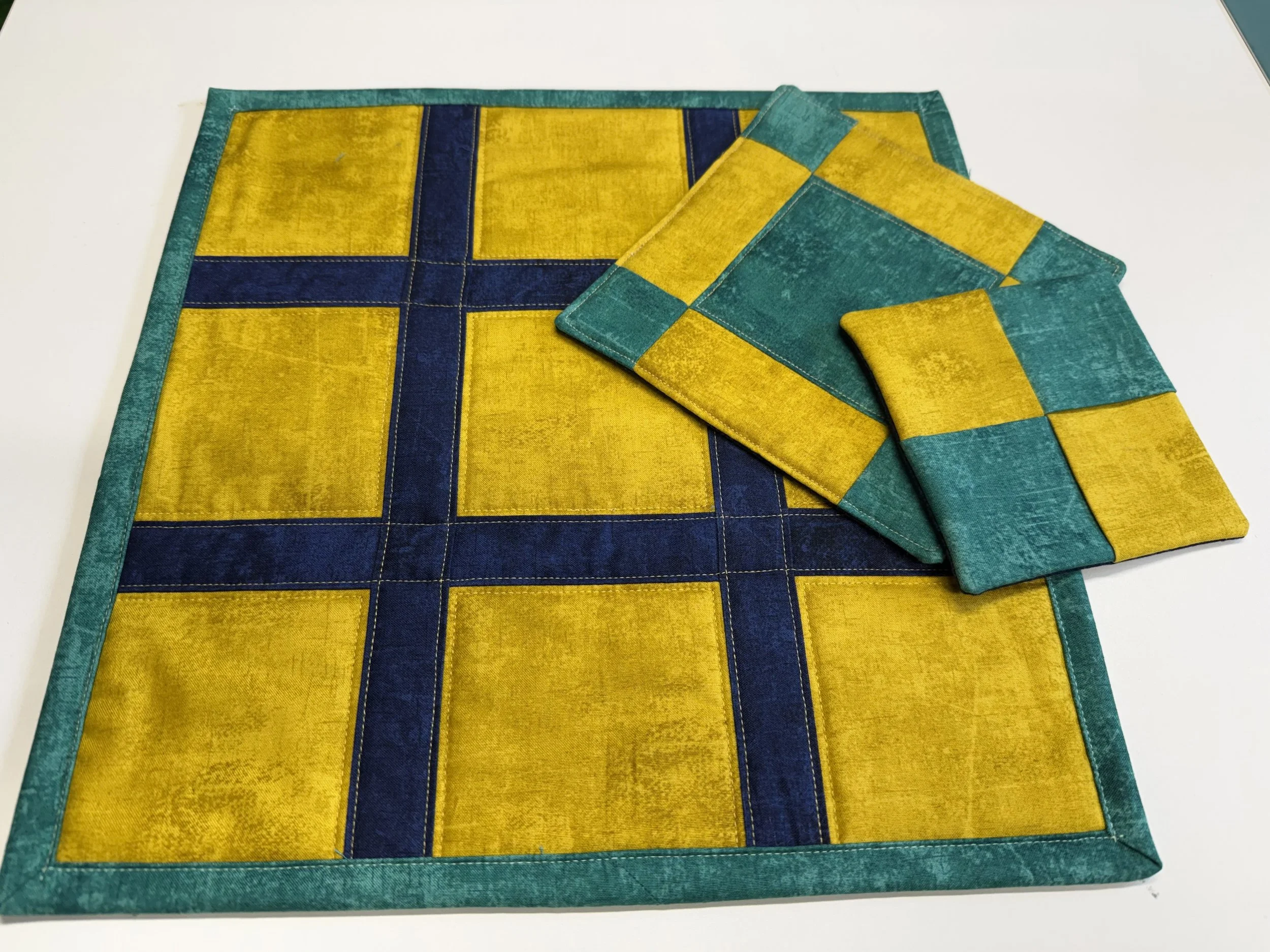
Coasters, mug rugs, placemats, hot pads, table runners and other small projects allow you to practise without managing the bulk of an entire quilt. They use less fabric, provide quicker feedback and give you the satisfaction of finishing something useful.
Just remember that small does not automatically mean easy. A tiny project filled with miniature pieces and lots of angles can demand more precision than a larger quilt made from simple blocks. Look for reasonably sized pieces, straight seams and instructions written with a complete beginner in mind.
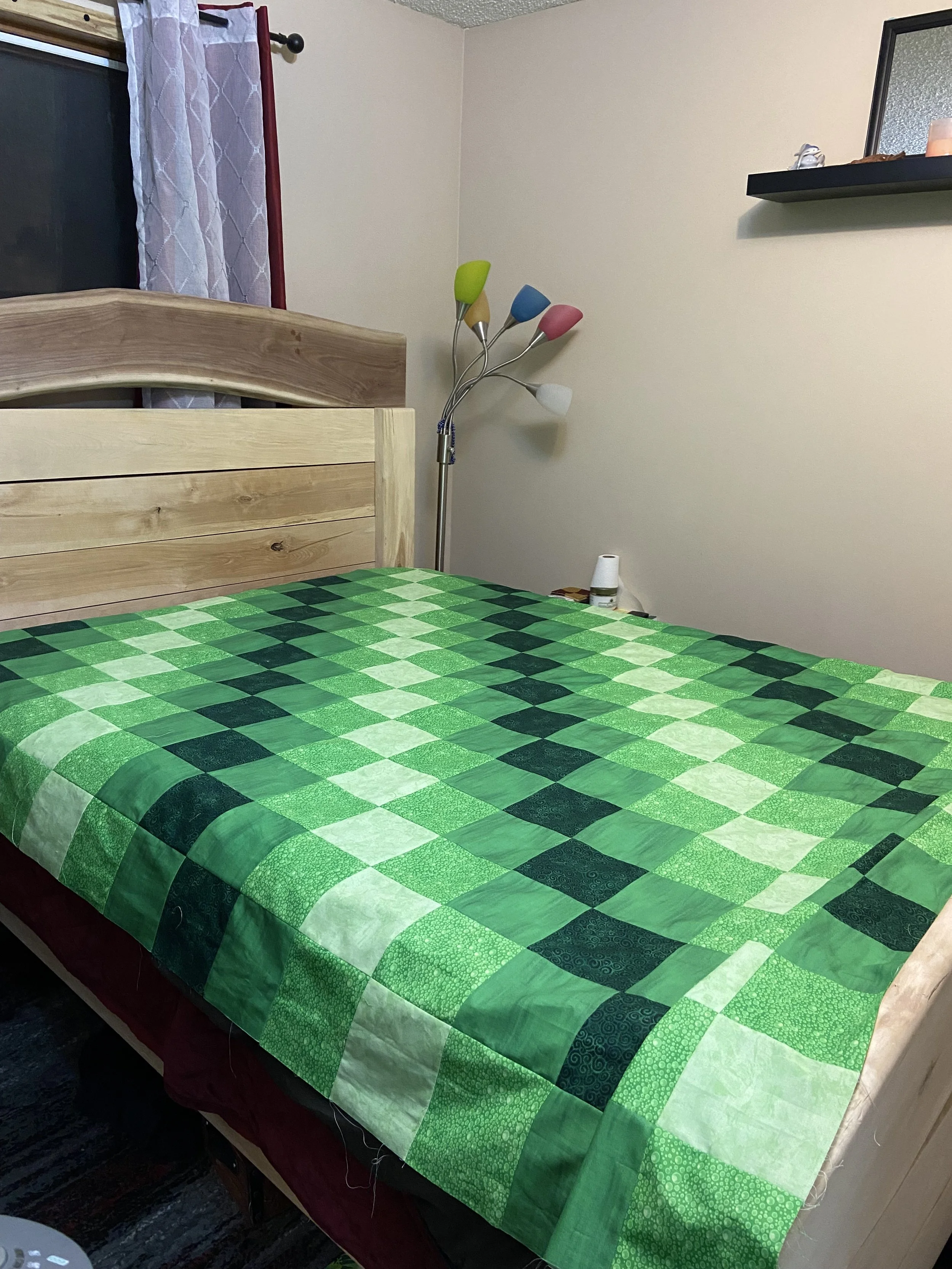
I Started Small Then Made a Twin XL Quilt
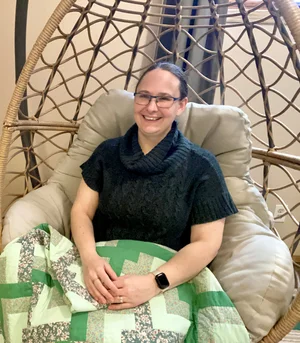
My own approach landed somewhere between cautious and “go big or go home.”
In 2021, I decided that cloth napkins in our wedding colours for the cotton anniversary was a neccessity. There was a big problem: I did not know how to sew and I didn’t own a sewing machine.
I asked around to see if I could hire someone to make them but after a several “no’s”, learning to do this became the next step. My husband and I went to our local quilt shop and came home with a sewing machine. While I was watching machine demonstrations, he was admiring the quilts hanging around the store. On the way home, he informed me that once the napkins were finished, he needed a quilt.
Before attempting that quilt, I made the napkins, a couple sets of coasters and quilted placemats.
Those smaller projects helped me understand how my machine worked and I become more comfortable working with fabric and batting. The small projects had simply given me enough confidence to believe I could work through the next step.
Then I found a beginner quilt tutorial and jumped into making a twin XL quilt.
What Should You Make For Your First Quilt?
Whether you are choosing to dive right in with a quilt as the first project or you’ve done some smaller projects and feel ready to attempt a quilt, here are a few things to look for that will help you have a great experience.
Squares, rectangles or simple strips
Larger pieces instead of tiny patchwork
Few seams or points that need to match
A manageable number of fabrics
Clear diagrams or video demonstrations
Instructions for quilting and binding
Choose a design you love. Quilts often involve making the same block over and over again. The repetition is helpful while learning, but it’s easy to find yourself wishing you were done making that block. Having a meaningful purpose for the quilt, such as a gift for someone you love or your home can help carry you through the final stretch of each quilting stage.
What If You Are Somewhere in the Middle?
You may be like me: cautious enough to want a little practice, but eager to make a real quilt once you understand the basics.
In that case, choose a short sequence of projects that intentionally build on one another. Learn a few new skills, use them again in the next project and gradually work toward the complete quilting process.
That is the approach behind Learn to Quilt: Foundations.
The course begins with folded coasters to help you become comfortable guiding fabric and sewing straight lines. Next, you will make nine-patch hot pads while learning about the quarter-inch seam, alignment, pressing, pinning and quilting. Finally, you will combine those skills in a quilted Three-in-a-Row game board with sashing, borders and binding.
By the end of the Foundations course you will have the skills and confidence to decide what you want to make next.
You can learn more about Learn to Quilt: Foundations here.
Your First Project Only Needs to Help You Begin
How you choose to start is ultimately up to you. Understanding your personality, maybe setting some boundaries (especially if you are a serial hobbiest), and choosing an appropriate-for-you project will set you up for success and maybe end your hunt for new hobbies.
Your first project does not need to prove that you are already good at quilting. It only needs to help you learn enough to take the next step.
Would you like to learn quilting through three useful projects that build on one another? Sign up below to receive Learn to Quilt: Foundations updates and be notified when enrolment opens.
Read these other relevant blogs
What Do You Actually Need to Start Quilting? If the cost of tools is influencing your decision to start quilting or you want a practical look at what is essential, what can wait, and how to begin with less, this blog will answer your questions.
Can I Quilt if I’ve Never Sewn? Yes, you can! This blog goes into the details.
About the Author
Krista Russell is the Canadian quilt pattern designer, longarm quilter and educator behind Timeless Quilt Studio. She combines her first-hand quilting experience with a Bachelor of Education and approximately 15 years of teaching experience to help beginners learn through clear, practical projects.